
Rugged & Reliable
CE, ATEX, ISO 9001
Local experts near you
£ 530
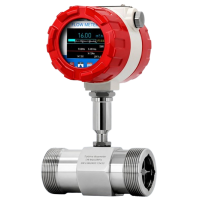
A turbine flow meter is a precision flow measurement instrument designed for applications where repeatability, mechanical stability, and clean signal output are required. In industrial plants, the flow meter is not selected only by pipe size or nominal flow rate. It must be matched to the real process: fluid type, viscosity, density, pressure, temperature, installation position, expected turndown, signal requirement, maintenance access, and long-term operating conditions.
Rockford supplies turbine flow meter solutions for industrial users who need dependable measurement rather than a generic flow device. Our approach begins with the process data. The engineering team reviews operating flow range, connection type, material compatibility, fluid cleanliness, pressure class, output signal, and control system requirements before recommending the correct configuration. This ensures that the selected turbine meter can provide stable measurement in the field, not only acceptable values on a datasheet.
Turbine technology is especially valued where fast response, compact construction, and repeatable flow indication are required. The rotor movement is directly influenced by fluid velocity, and the generated signal can be used for local indication, batching, monitoring, totalizing, or integration with PLC, DCS, SCADA, and automation systems.
A properly specified turbine flow meter must perform under continuous process conditions. For this reason, Rockford focuses on engineering quality, mechanical reliability, and configuration accuracy. Industrial applications often involve vibration, pressure fluctuation, temperature variation, limited installation space, and strict documentation needs. A flow meter must remain stable in these environments while delivering a usable signal to the control system.
Rockford’s turbine flow meter category is developed for projects where technical confidence matters. Whether the requirement is replacement of an existing instrument, new skid fabrication, plant expansion, OEM equipment, or process optimization, the instrument must be selected with the complete system in mind. This includes upstream and downstream pipe conditions, filtration, electrical connection, signal scaling, calibration expectation, and maintenance planning.
The result is a measurement solution that supports plant operation, reduces uncertainty during procurement, and gives engineers a clear basis for installation and commissioning.
A turbine flow meter operates by placing a rotor in the flowing stream. As the fluid passes through the meter body, it drives the rotor at a speed proportional to the flow velocity. A pickup sensor detects the rotor movement and converts it into an electrical pulse or frequency signal. This signal can then be processed as instantaneous flow rate, totalized volume, or a scaled output for automation systems.
The mechanical simplicity of this principle is one of the main reasons turbine flow meters remain widely used in industry. When the fluid is suitable and the installation is correct, turbine meters can provide fast response, repeatable measurement, and reliable operation over a wide range of applications.
However, the performance depends strongly on correct sizing. A turbine meter must operate within its recommended flow range. If the flow is too low, the rotor may not respond consistently. If the flow is too high, excessive wear, pressure loss, or measurement error may occur. That is why Rockford’s engineering selection process considers minimum flow, normal flow, maximum flow, viscosity, line size, and process conditions before final configuration.
The output of a turbine flow meter is one of its most important project considerations. Many installations require pulse output for batching or totalizing. Others require frequency signal, 4–20 mA conversion, local display, digital communication, or integration into PLC and SCADA systems. The correct output depends on how the flow data will be used in the plant.
Rockford supports customers in matching the turbine flow meter to the required control architecture. In a batching application, fast pulse response and accurate totalization may be critical. In a monitoring system, stable signal conditioning and clear scaling may be more important. In an OEM skid, compact design and repeatable production configuration may be the priority.
Electrical connection, cable entry, enclosure protection, hazardous area requirements, and display options should also be reviewed during selection. A technically correct turbine meter is not only the right mechanical size; it is a complete measuring point configured for the process, the control system, and the operating team.
Correct sizing is the foundation of reliable turbine flow measurement. Selecting a meter only by pipe diameter can lead to poor performance. The key parameters include minimum, normal, and maximum flow rate; fluid viscosity; pressure and temperature; material compatibility; required accuracy; and allowable pressure drop.
Rockford engineers evaluate the complete flow profile before recommending a configuration. A meter that is too large may not measure low flow accurately. A meter that is too small may create excessive velocity, pressure loss, or mechanical stress. Proper sizing keeps the rotor within its optimal operating range and improves repeatability over the expected duty cycle.
In industrial projects, the “normal flow” value is often more important than the theoretical maximum. The meter should be selected so that daily operation occurs in the stable measuring zone. Start-up conditions, cleaning cycles, seasonal changes, and process variations should also be considered. This is where manufacturer-side sizing support provides real value. Rockford helps translate process data into a practical instrument specification suitable for purchasing, installation, and commissioning.
A turbine flow meter must be compatible with the fluid and the piping system. Body material, rotor material, bearing design, seal material, connection type, and pressure rating all affect long-term reliability. For clean industrial liquids, stainless steel construction is often preferred because of its strength and corrosion resistance. For specific fluids, seal and bearing compatibility must be verified before ordering.
Connection type is another important factor. Threaded, flanged, sanitary, or custom process connections may be required depending on the application. The installation environment also determines whether the meter needs compact electronics, remote display, weather-resistant enclosure, or hazardous area consideration.
Rockford supports custom configuration when standard selection is not enough. This may include special connection requirements, signal conditioning, display integration, calibration documentation, tagging, or configuration for OEM and skid-mounted systems. The goal is not simply to ship a flow meter; the goal is to deliver a measuring solution that fits the physical, electrical, and operational requirements of the project.
Turbine flow meters are used across many industrial sectors where clean, low-to-medium viscosity fluids or gases require accurate and repeatable measurement. Typical applications include water treatment, chemical dosing, fuel monitoring, lubrication systems, cooling circuits, test benches, hydraulic systems, batching lines, utility monitoring, and process skids.
In production environments, repeatability is often as important as absolute accuracy. Operators need consistent measurement to control consumption, verify batch quantity, monitor efficiency, and detect abnormal process behavior. A turbine flow meter can provide a strong solution when the fluid condition is suitable and the installation is correctly designed.
Rockford supports both new installations and replacement projects. For replacement work, our team can review existing instrument data, pipe size, connection standard, signal type, and operating conditions to recommend a compatible or improved configuration. For new projects, we help define the measuring point from the beginning so the selected turbine meter supports long-term operation.
Many turbine flow meter requirements come from OEM manufacturers, skid builders, and system integrators. In these projects, consistency, repeatable configuration, compact construction, and documentation are critical. The instrument must fit the mechanical layout, meet the electrical control requirement, and be available in a configuration that can be repeated across multiple units.
Rockford works with project teams to align turbine flow meter selection with package design. This includes reviewing space restrictions, connection orientation, control panel requirements, pulse scaling, cable routing, labeling, documentation, and calibration needs. For skid-mounted systems, the flow meter may also need to operate with pumps, valves, filters, regulators, and control logic as part of a complete engineered assembly.
This manufacturer-oriented support helps reduce rework during assembly and commissioning. Instead of treating the turbine meter as a loose component, Rockford treats it as part of a complete measurement loop.
Even a correctly selected turbine flow meter can perform poorly if installation conditions are not controlled. Turbine meters generally require stable flow profile, proper pipe alignment, clean fluid, and suitable upstream and downstream straight pipe runs. Disturbed flow from elbows, valves, pumps, reducers, or partially open control valves can affect rotor behavior and measurement stability.
Filtration is also important. Particles, debris, welding residue, or scale can damage the rotor or bearings. In many industrial installations, a strainer or filter upstream of the meter is recommended to protect the measuring element. The meter should also be installed in the correct flow direction and in a position that avoids air pockets, cavitation, or partial pipe conditions.
Rockford helps customers review installation constraints before finalizing the instrument. If pipe layout is limited, our engineers can advise on practical solutions such as flow conditioning, revised location, different meter size, or alternative measurement technology when turbine technology is not the best fit. This prevents avoidable measurement problems after installation.
Calibration provides confidence that the turbine flow meter performs according to the expected measurement requirement. Depending on the application, customers may require factory calibration, calibration certificate, traceability documentation, or specific test conditions. For batching, custody-related monitoring, quality control, or process-critical measurement, calibration requirements should be defined before purchase.
Over time, mechanical wear, fluid contamination, bearing condition, and process changes can affect performance. A maintenance plan should include inspection, cleaning, verification, and recalibration intervals based on duty severity. Clean, stable fluids may allow longer service intervals, while abrasive, dirty, or high-duty applications require closer monitoring.
Rockford supports customers with technical guidance for calibration planning, replacement selection, and lifecycle support. This reduces downtime and helps maintenance teams keep the measurement loop reliable. When a flow meter is part of a critical process, serviceability and documentation are not optional details; they are part of the engineering value of the instrument.
Rockford is not only a supplier of turbine flow meters. We provide engineering support for selection, sizing, configuration, and project execution. Our role is to help customers specify the correct instrument for the real application, reducing uncertainty for purchasing teams, engineers, and maintenance departments.
The selection process can include review of flow range, fluid properties, line size, pressure, temperature, output signal, connection type, material compatibility, environmental conditions, and documentation requirements. This project-based approach is essential because every measurement point has its own operating reality.
For customers, the benefit is clear: fewer specification errors, better installation readiness, and a more reliable measuring point. Rockford’s engineering team can support industrial buyers, EPC contractors, OEM builders, maintenance teams, and plant engineers who need technically correct flow measurement solutions.
A turbine flow meter should be purchased with confidence. Industrial buyers need more than a part number; they need confirmation that the instrument matches the process and can be supported after delivery. Rockford provides a complete approach that includes product selection, technical review, configuration support, documentation, and application guidance.
For demanding industries, the correct instrument improves process control, reduces operational risk, and supports long-term measurement stability. Rockford’s turbine flow meter solutions are built around this principle. We help customers move from an application requirement to a configured, project-ready flow measurement device.
If your application requires accurate flow rate measurement, batch control, totalization, utility monitoring, or integration into an automated process, Rockford can help size and configure the correct turbine flow meter for your system. Share your process data with our engineering team, and we will support you with a practical, technically reliable solution designed for industrial operation.
* Required field
Do not use special platform-dependent characters
After filling out the form, click “Submit”