
Rugged & Reliable
CE, ATEX, ISO 9001
Local experts near you
£ 800
Electromagnetic flowmeters are engineered for one clear purpose: stable, obstruction-free measurement of conductive liquids in industrial pipelines. In a magnetic flowmeter, the measuring tube generates a controlled magnetic field, and the movement of a conductive fluid through that field produces a signal proportional to flow velocity. The result is a flow measurement technology that avoids moving mechanical parts, reduces pressure loss, and supports continuous operation in demanding process environments.
For a manufacturing plant, water treatment facility, chemical line, utility network, or slurry application, the value is not only accuracy on a datasheet. The real requirement is repeatable measurement under plant conditions: changing flow demand, process vibration, wet environments, chemical compatibility, control system integration, and long operating cycles. Rockford designs and supplies electromagnetic flow measurement solutions with this project reality in mind, supporting customers from initial selection through sizing, configuration, installation review, and engineering support.
A magnetic flowmeter is suitable when the process fluid has sufficient electrical conductivity and the pipe remains full during measurement. The meter does not require a rotating turbine, an orifice restriction, or a mechanical element in the flow path. This is important in processes where suspended solids, dirty liquids, or corrosive media would create wear, blockage, or pressure drop in other flowmeter technologies.
Because the measuring signal is based on fluid velocity, correct sizing is essential. The selected bore size should support the expected minimum, normal, and maximum flow conditions. In some projects, the meter size follows the pipe size. In others, the flowmeter may be engineered differently to keep velocity within a better measuring range.
Electromagnetic flowmeters are especially effective in conductive liquid applications such as water, wastewater, cooling water, chemical transfer, effluent lines, process water, slurry, pulp, and many industrial utilities. They are not intended for oil, gas, steam, air, or non-conductive liquids. This distinction is critical. A magnetic meter selected for the wrong fluid may look technically acceptable in procurement documents but fail in operation.
Rockford supports customers in identifying where magnetic flow measurement is the correct technology and where another principle should be considered. This engineering review protects the project from wrong selection, unstable measurement, unnecessary maintenance, and replacement costs after installation.
Rockford’s role is not limited to supplying an instrument from a product list. In industrial flow measurement, the correct answer depends on the process. A reliable recommendation requires fluid data, pipe data, operating pressure, operating temperature, conductivity, flow range, connection standard, material compatibility, output requirements, environmental conditions, and installation constraints.
This manufacturer-led approach is especially important for electromagnetic flowmeters because performance depends on more than the transmitter. The sensor body, liner, electrodes, grounding method, flange rating, transmitter housing, power supply, communication protocol, and installation position must operate as one measurement system.
Before a magnetic flowmeter is selected, Rockford can review the working fluid and the process conditions. The engineering team considers whether the fluid is conductive, whether it contains solids or abrasive particles, whether it is chemically aggressive, whether the pipe runs full, and whether the line has stable flow conditions. This review also helps determine whether a compact or remote configuration is more practical for the site.
For chemical or slurry service, material compatibility becomes a central part of selection. A poor electrode or liner choice can create corrosion, abrasion, signal instability, or premature failure. For outdoor, buried, wet, or washdown areas, protection rating and cable routing must also be treated as engineering decisions, not accessories.
Sizing begins with real flow data. Rockford can use minimum, normal, and maximum flow rates to evaluate a suitable meter diameter and help define the configuration required for the application. The process connection must match the pipeline standard, whether the project requires DIN, ANSI, JIS, or another flange specification.
A complete configuration may include pipe diameter, liner material, electrode material, power supply, signal output, grounding arrangement, calibration requirement, process pressure limit, temperature requirement, and hazardous-area options when needed. This structured selection process gives procurement teams, engineers, and maintenance departments a clear technical basis for ordering the instrument.
Rockford electromagnetic flowmeters are built around industrial configuration flexibility. Different sites require different process connections, materials, outputs, approvals, and installation arrangements. A meter used for clean water distribution will not require the same configuration as a meter used for corrosive chemical dosing or abrasive slurry transfer.
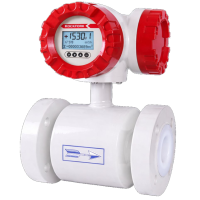
The Rockford F800 electromagnetic flowmeter represents this project-based approach. It is designed for conductive liquid flow measurement in industrial and utility applications, with options that support a wide range of pipe sizes, process connections, liner materials, electrode materials, signal outputs, power supplies, and grounding methods.
Correct mechanical configuration starts with pipe size and process connection. Rockford magnetic flowmeters can be selected for small and large industrial pipelines, with flanged connections suitable for common pressure classes and international standards. The meter body, flange material, and housing should be chosen according to the mechanical and environmental demands of the plant.
The liner protects the internal measuring tube from the process fluid. Options such as PTFE, PFA, polyurethane, and rubber-type liners are selected according to temperature, chemical resistance, abrasion level, and service type. Electrode material is equally important because the electrodes are in contact with the liquid. Stainless steel, Hastelloy, titanium, tantalum, platinum, tungsten carbide, or other materials may be considered depending on the fluid chemistry and wear conditions.
A flowmeter must communicate correctly with the plant control architecture. Rockford configurations can support common industrial outputs and communication options such as 4–20 mA, pulse, alarm, Modbus RS-485, HART, PROFIBUS, and FOUNDATION Fieldbus, depending on the selected specification. This allows integration with PLC, DCS, SCADA, batching systems, pump control, and local monitoring panels.
Power supply selection must also match the site infrastructure. AC supply, DC supply, or battery-powered arrangements may be considered according to the installation requirement. For remote areas, retrofit projects, or sites with limited cable access, this can significantly affect the final engineering solution.
Even a correctly specified electromagnetic flowmeter can underperform if installation conditions are ignored. Magnetic flow measurement requires a stable hydraulic and electrical environment. The pipe should remain full, the meter should be correctly grounded, and the transmitter should be protected from unnecessary electrical noise, vibration, and environmental stress.
Rockford’s engineering support helps customers review practical site conditions before installation. This reduces commissioning problems and improves measurement reliability after the instrument is installed in the line.
A magnetic flowmeter should be installed where the pipe remains completely full. Partially filled pipes, air pockets, empty-pipe conditions, and unstable flow profiles can cause fluctuating or unreliable readings. In many applications, vertical installation with upward flow is preferred, especially where air or solids may create measurement problems.
Grounding is another critical factor. Because the measuring signal is electrical, the meter needs a stable reference. Grounding rings, grounding electrodes, or protection rings may be required depending on pipe material, fluid conductivity, and site conditions. Straight-run guidance, correct gasket alignment, and distance from pumps, valves, elbows, and sudden pipe reductions should also be reviewed during engineering.
Some applications require the transmitter to be separated from the sensor. A remote version can be useful when the pipeline is exposed to flooding, vibration, high temperature, limited access, or harsh environmental conditions. Sensor protection, cable specification, cable routing, and enclosure rating must be selected with the site in mind.
For hazardous or demanding industrial locations, explosion-proof options, robust housings, IP protection, material certificates, calibration documentation, and traceability may be required by the project. Rockford can support these requirements as part of a complete instrument package rather than treating them as afterthoughts.
Electromagnetic flowmeters are widely used where conductive liquids must be measured continuously and reliably. Their open flow path makes them practical for processes where mechanical meters may suffer from wear, clogging, or pressure loss. For plant operators, this can reduce maintenance intervention and improve long-term measurement stability.
Rockford supports industries where flow measurement affects process control, environmental compliance, batching accuracy, utility monitoring, and production reliability. The goal is not simply to install a meter, but to deliver a measurement point that fits the plant duty.
In water and wastewater systems, magnetic flowmeters are used for abstraction, distribution, treatment, effluent discharge, sludge handling, pump discharge monitoring, and leakage management. These applications often involve dirty water, suspended solids, variable flow rates, and outdoor installation conditions.
For industrial utilities, magnetic meters can monitor cooling water, process water, recycling water, service water, and plant distribution networks. In these applications, reliable flow data helps operators control pump performance, detect abnormal consumption, balance utility lines, and document operating conditions.
In chemical applications, the main engineering challenge is compatibility. The liner and electrode materials must be selected against the actual chemical, concentration, temperature, and operating pressure. For slurry, pulp, mining, or abrasive liquid applications, wear resistance and velocity control are essential.
Food and beverage applications may require stable dosing, filling, mixing, and transfer measurement for conductive liquids. The instrument specification should consider hygiene requirements, cleaning conditions, material suitability, and signal integration with production controls. Rockford’s configuration process allows each application to be reviewed according to its process duty rather than treated as a generic flow point.
A strong electromagnetic flowmeter category page should not only explain the technology. It should prove that Rockford can support an industrial project from inquiry to operation. This includes product selection, application validation, sizing, configuration, documentation, calibration options, and technical support after supply.
Rockford’s electromagnetic flowmeter offering is positioned for customers who need dependable conductive liquid measurement and a practical engineering partner. The F800 and related magnetic flowmeter configurations can be matched to the process, the pipeline, the environment, and the control system.
Rockford can help customers define the correct instrument by reviewing fluid name, conductivity, flow range, pipe size, pressure, temperature, solids content, installation position, required outputs, communication protocol, power supply, flange standard, and protection level. This allows the final offer to be based on engineering conditions rather than only a model number.
During procurement, Rockford can support documentation such as product catalogues, operating instructions, declarations of conformity, calibration requirements, material traceability, and warranty options where applicable. During installation and commissioning, the focus remains on correct grounding, full pipe condition, wiring, configuration, and signal verification.
Choosing Rockford means specifying a flow measurement solution with technical accountability. The meter must be suitable for the liquid, correctly sized for the flow range, mechanically compatible with the pipeline, electrically compatible with the control system, and physically suitable for the plant environment.
For new projects, replacements, upgrades, or problem applications, Rockford’s engineering team can review the duty and recommend a practical configuration. Customers can share process data, installation drawings, flow conditions, and control requirements to receive a project-ready recommendation for electromagnetic flow measurement. This is the difference between purchasing a flowmeter and engineering a measurement point that performs reliably in the field.
* Required field
Do not use special platform-dependent characters
After filling out the form, click “Submit”